
Advanced Composite Materials Shaping the Future of Drones and UAV Technology
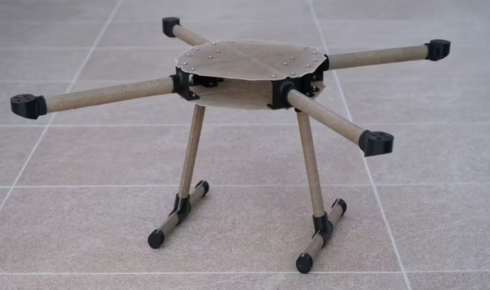
The rapid growth of drone technology has transformed industries ranging from defense and agriculture to logistics, mapping, and infrastructure inspection. At the heart of this evolution lies material innovation. Lightweight, strong, and durable composite materials have become essential for improving flight performance, efficiency, and reliability. Today, composites for drones play a critical role in enabling longer flight times, higher payload capacity, and enhanced structural integrity across a wide range of unmanned aerial platforms.
Why Composites Are Essential in Modern Drones
Drones and unmanned aerial vehicles (UAVs) must balance strength and weight more precisely than most other machines. Every extra gram affects endurance, maneuverability, and energy consumption. Composite materials—typically made from fibers such as carbon or glass embedded in a resin matrix—offer exceptional strength-to-weight ratios that traditional metals cannot match. This makes them ideal for airframes, wings, propellers, and internal structural components.
Beyond weight savings, composites provide excellent fatigue resistance, corrosion resistance, and vibration damping. These properties are especially important for drones that operate in harsh environments, from humid coastal areas to high-altitude or desert conditions.
UAV Composites and Structural Performance
UAV composites are engineered to deliver high stiffness and tensile strength while maintaining aerodynamic efficiency. Carbon fiber reinforced polymers (CFRP) are among the most widely used materials due to their superior mechanical properties. They allow designers to create thin yet rigid structures that improve lift-to-drag ratios and overall flight stability.
In addition, composite layup techniques enable precise control over fiber orientation. This allows engineers to tailor strength exactly where it is needed, such as reinforcing wing roots or motor mounts, without adding unnecessary weight elsewhere.
UAS Composite Materials for Diverse Applications
Unmanned aircraft systems (UAS) vary significantly in size and purpose—from small quadcopters to large, fixed-wing surveillance platforms. UAS composite materials must therefore be adaptable to different performance requirements. For smaller drones, composites help maximize battery efficiency and agility. For larger systems, they provide the structural robustness needed to carry advanced sensors, cameras, and communication equipment.
Composites also support modular designs, making repairs and upgrades easier. Damaged sections can often be replaced without dismantling the entire airframe, reducing downtime and maintenance costs.
The Role of UAV Prepregs in Manufacturing
UAV prepregs have become a preferred material form in high-performance drone manufacturing. Prepregs are fibers pre-impregnated with precisely measured resin, ensuring consistent quality and optimal fiber-to-resin ratios. This consistency translates into predictable mechanical performance and reduced manufacturing defects.
Using prepregs also allows for cleaner production processes and better surface finishes, which is critical for aerodynamic efficiency. When combined with automated layup and curing techniques, prepregs help manufacturers scale production while maintaining strict quality standards.
Faster Production with Advanced Curing Technologies
As drone demand increases, manufacturers are under pressure to reduce production cycles without sacrificing quality. This is where snap cure composites are making a significant impact. These advanced materials are designed to cure rapidly at lower temperatures, dramatically shortening manufacturing time.
Fast-curing systems enable higher throughput, lower energy consumption, and quicker turnaround from design to deployment. For industries that rely on rapid innovation—such as defense, emergency response, and commercial delivery—this speed offers a clear competitive advantage.
The Future of Drone Composite Materials
The future of drone technology will continue to be shaped by advances in composite materials. Innovations in resin chemistry, fiber architectures, and curing processes will further enhance performance, sustainability, and cost efficiency. As drones take on more complex missions and operate in more demanding environments, composite materials will remain central to their success.
In conclusion, from lightweight structures and tailored strength to faster manufacturing and improved durability, composite materials are redefining what drones can achieve. Their ongoing development ensures that UAV and UAS platforms will continue to fly farther, carry more, and perform better in the years ahead.